
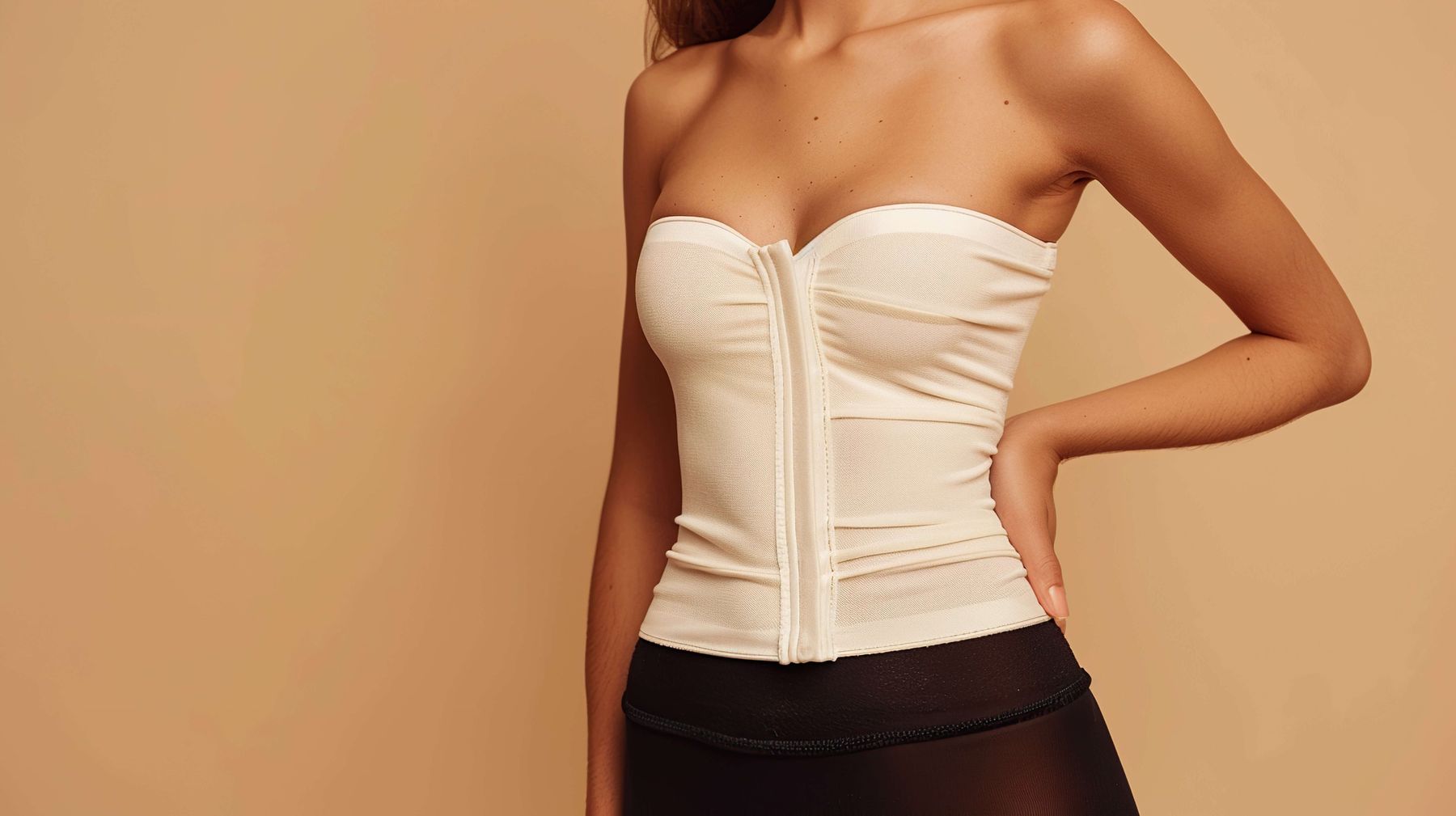
alloClae™ is a structural adipose tissue filler that restores real fat-like softness and contour without harvesting fat from your own body. It is designed for patients who want to smooth localized dents, fill hip dips, soften implant rippling, or add subtle natural fullness — especially when they are too lean for liposuction or want to skip surgical downtime.
At Northwestern Specialists in Plastic Surgery in Chicago, our surgeons use alloClae™ in-office under local anesthesia through tiny cannula entry points. Unlike synthetic hyaluronic acid gels, alloClae™ is derived from purified, biocompatible donor adipose tissue that retains intact fat structure and a natural collagen extracellular matrix.
Once placed into areas where fat naturally belongs, this three-dimensional scaffold provides immediate, supple cushioning and gradually integrates with your own surrounding soft tissue.
What is alloClae™, and how does it work?
For decades, adding soft, natural volume to the body or breasts meant choosing between surgical implants, autologous fat grafting (which requires liposuction from another body area first), or synthetic dermal fillers that were never designed for larger body contours.
alloClae™ introduces a different category: an off-the-shelf, sterile structural adipose allograft.
- Real adipose architecture: Processed from screened, donated human adipose tissue to preserve structural adipocytes, natural lipids, and native collagen extracellular matrix while removing immunogenic cellular debris.
- 3D regenerative scaffold: Rather than sitting as an isolated gel pocket, the porous adipose matrix encourages your body's own blood vessels and cells to grow into the framework over the months following placement.
- True fat feel: Because it is composed of real adipose matrix placed into subcutaneous fat planes, it moves and compresses with the softness of native fat tissue.
What areas can alloClae™ treat?
alloClae™ is intended for targeted contour refinement and soft-tissue cushioning in areas where subcutaneous fat naturally resides — not as a replacement for high-volume implants or major surgical body lifts. Common applications include:
- Hip dips and buttock dimples: Smoothing inward trochanteric depressions along the outer hips or localized contour indentations without undergoing full-body liposuction.
- Subtle breast contouring & implant refinement: Softening visible implant edges or upper-pole rippling in thin patients, refining cleavage transitions, or correcting small contour asymmetries.
- Post-liposuction or post-surgical indentations: Filling localized divots, tethered depressions, or uneven contours left behind by prior procedures or trauma.
- Rejuvenation of thin soft-tissue envelopes: Restoring youthful subcutaneous padding in select areas such as the hands or décolleté transition.
Am I a good candidate for alloClae™?
You may be an ideal candidate for alloClae™ if you:
- Are slender or athletic and do not have enough excess donor fat to harvest for traditional fat grafting
- Want targeted, natural-feeling contour smoothing or modest volume enhancement rather than a dramatic multi-cup or high-volume size jump
- Prefer an in-office procedure under local anesthesia with minimal interruption to work, parenting, or workouts
- Want to correct a specific dent, dimple, hip dip, or area of breast implant rippling without returning to the operating room
If you are looking for substantial breast enlargement or large-volume buttock projection — and you have adequate donor fat — surgical breast augmentation or autologous fat transfer will be far more cost-effective per cubic centimeter. Your NSPS surgeon will compare every option transparently during your consultation.
alloClae™ vs. autologous fat transfer vs. synthetic fillers
Each volumizing approach has distinct strengths:
- alloClae™ structural adipose matrix: Ready to place off the shelf with zero donor-site liposuction, bruises, or compression garments elsewhere on the body; feels like native fat and integrates into your own tissue scaffold; best suited for small-to-moderate, high-precision volumes.
- Autologous fat grafting (your own fat): Ideal when you want larger volumes (for example, full-breast fat transfer or Brazilian butt lift) AND welcome slimming a donor area like the abdomen or flanks via liposuction.
- Hyaluronic acid & biostimulatory skin fillers: Well suited for fine facial lines, lips, and small facial zones, but generally temporary or less natural in feel when used in larger body or breast planes.
What to expect during an in-office alloClae™ session
Your visit starts with precise standing markings in front of a mirror so you and your NSPS surgeon agree on the exact contour zones to build or smooth. After sterile preparation, local numbing medication is placed at a tiny pinhole entry point.
Using a smooth, blunt-tipped micro-cannula — similar to fine fat-grafting instruments — your NSPS surgeon feathers small, layered ribbons of alloClae™ into the subcutaneous plane so the matrix receives healthy contact from your surrounding tissue on all sides. There are no stitches, only small sterile dressings over the entry pinholes, and you walk out of the office right after treatment.
Recovery and how results evolve
Because there is no liposuction harvest site, recovery is remarkably light. Expect mild swelling, tenderness, and occasional bruising at the treated spot for several days. Most patients return to desk work the next day and light daily errands immediately.
To help the newly placed adipose scaffold integrate undisturbed, you should avoid direct, prolonged compression, tight waistbands/underwires over the treated zone, or high-impact exercise for roughly one to two weeks as instructed by your NSPS surgeon. Early fullness softens subtly over the first six to twelve weeks as fluid absorbs and your native tissue incorporates the scaffold.
Safety, screening, and considerations
alloClae™ undergoes rigorous donor screening, sterilization, and processing under tissue-safety standards. As with any fat-based or injectable contouring treatment, potential risks include bruising, swelling, infection, contour asymmetry, partial volume resorption requiring a touch-up session, firm palpable nodules or fat necrosis, and rare vascular complications (mitigated by using blunt cannulas in safe subcutaneous planes).
When alloClae™ is used around the breast, small benign calcifications or oil cysts can occasionally appear on future mammograms — identical to standard autologous fat grafting — which experienced breast radiologists readily distinguish from suspicious findings. Always inform your imaging center of prior breast contouring.
How much does alloClae™ cost in Chicago?
Pricing for alloClae™ depends primarily on the number of syringes/cubic centimeters needed to achieve your contour goal. During your consultation, your NSPS surgeon will measure the treatment zone, estimate the exact volume required, and compare the cost transparently against traditional fat grafting or surgical alternatives so you can decide what makes the most sense.
Why choose a board-certified plastic surgeon for alloClae™
Even though alloClae™ requires no scalpel, achieving smooth, lump-free, lasting integration depends on surgical-grade fat-grafting technique — placing fine micro-droplets into the exact anatomical plane with blunt cannulas rather than bolusing material in one spot.
As a Harvard-educated, Northwestern-trained, board-certified plastic surgeon in Chicago experienced in both autologous fat transfer and advanced breast and body aesthetics, your NSPS surgeon brings operating-room precision to every in-office contouring procedure.
alloClae™ Recovery Timeline
- Day 1Walk out of the office after treatment; mild fullness and tenderness at the treated site, with no donor-site soreness.
- Days 1–3Most patients resume desk work and everyday activities; avoid tight pressure or lying directly on newly contoured areas.
- Weeks 1–2Minor swelling and any bruising fade; gradually return to normal workouts once cleared by your NSPS surgeon.
- Weeks 6–12alloClae™ scaffold settles and integrates softly with your surrounding tissue, revealing your smooth contour.
Individual healing timelines vary. Your NSPS surgical team provides tailored post-operative guidance.
Video Education
alloClae™ Frequently Asked Questions
Is alloClae my own fat?
No. Traditional fat grafting uses autologous fat, meaning fat harvested from your own body. alloClae is derived from donated human adipose tissue that has been processed for use as a structural adipose tissue allograft.
Do I need liposuction?
No. This is one of the primary differences between alloClae and traditional fat grafting. There is no need to perform liposuction simply to obtain fat for treatment.
Is alloClae a synthetic filler?
No. alloClae is derived from donated human adipose tissue. It is not a traditional synthetic dermal filler.
Does alloClae contain living stem cells?
No. alloClae does not contain viable cells.
Can alloClae be used for breast implant rippling?
It may be used to provide additional soft-tissue volume and support in localized areas of the breast where fat naturally exists. For appropriately selected patients, this may help camouflage visible implant edges, rippling, or small contour irregularities.
Can alloClae replace a breast implant?
alloClae is designed for localized volume restoration and contour refinement rather than replacing the volume achievable with a breast implant. Patients seeking a significant increase in breast size may be better candidates for breast augmentation
Can alloClae replace a BBL?
No. alloClae is particularly useful for targeted contour refinement, such as softening hip dips or correcting smaller areas of volume deficiency. Patients seeking significant gluteal augmentation require a different treatment strategy.
Can alloClae be used if I'm very thin?
This is one of the situations in which alloClae may be particularly valuable. Thin patients frequently have limited donor fat available for traditional fat grafting. Because alloClae does not require harvesting your own fat, it may allow us to perform targeted volume correction even when adequate donor fat is not available.
Can alloClae be used during another surgery?
Yes, when clinically appropriate, alloClae may be incorporated into a surgical treatment plan to address specific areas requiring additional soft-tissue volume or contour refinement.
How much alloClae will I need?
The amount required varies considerably depending on the treatment area, anatomy, and desired correction. A small area of implant rippling may require substantially less volume than bilateral hip contouring. Your provider will evaluate the area during your consultation and develop a treatment plan based on your individual goals.