
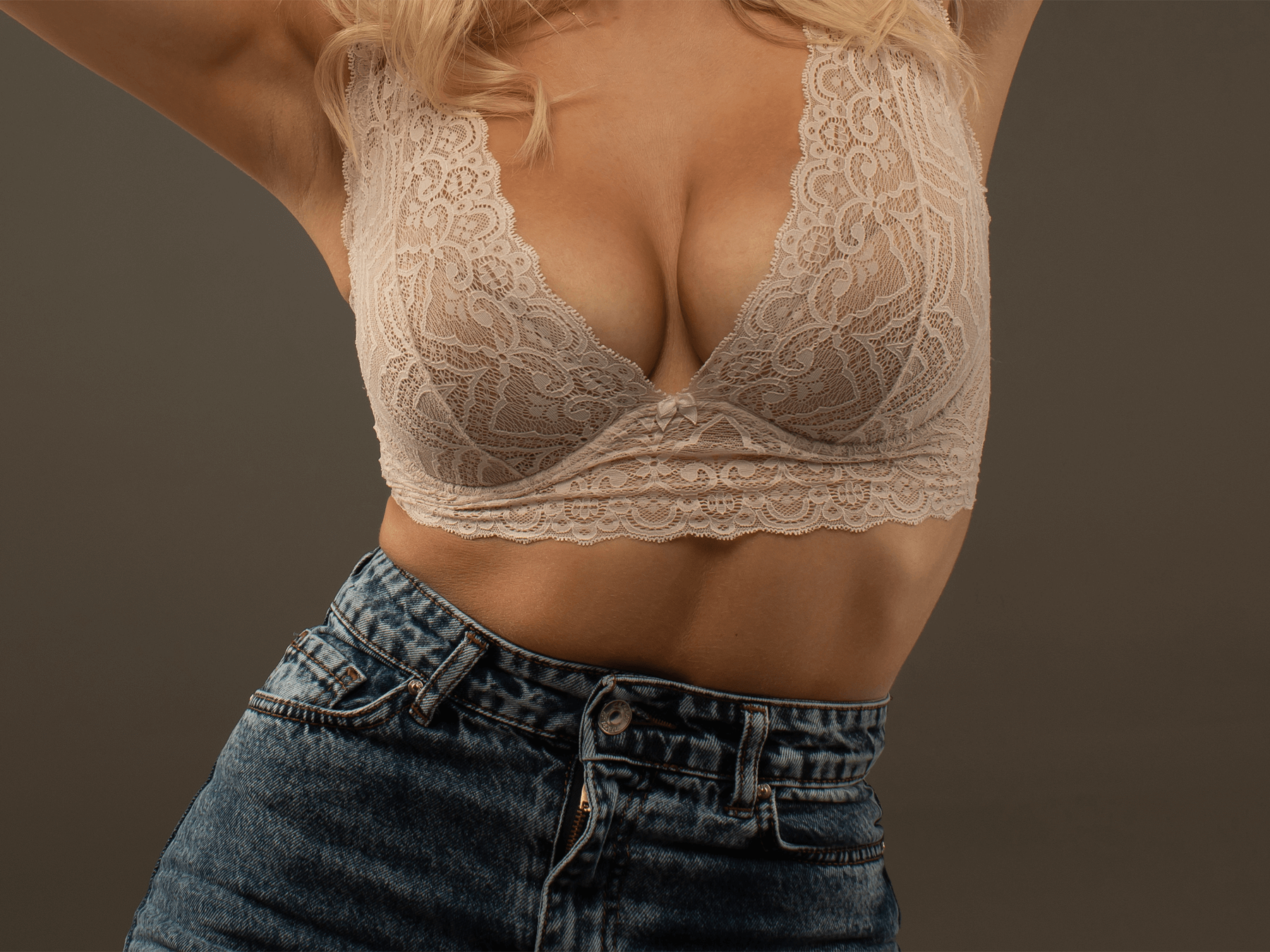
A breast lift, also called mastopexy, raises and reshapes breasts that have started to sag. It's a good option if pregnancy, breastfeeding, weight changes, or time have left your breasts lower, flatter, or with nipples that point downward.
During a lift, your NSPS surgeon removes excess skin, reshapes the breast tissue, and moves the nipple and areola to a higher, more youthful position. The result is a perkier, firmer shape using your own tissue.
Women across Chicago turn to your NSPS surgeon for a lift that looks natural and balanced. If you'd also like more fullness, a lift can be combined with breast implants in one operation.
Am I a good candidate for a breast lift?
You may benefit from a breast lift if your breasts have lost their shape or position. A simple test: if your nipples sit at or below the fold under your breasts, a lift may help.
- Breasts that sag or hang lower than you'd like
- Nipples that point downward
- Stretched or enlarged areolas
- One breast that sits lower than the other
- Breasts that look flatter or longer after pregnancy or weight loss
Good candidates are healthy, don't smoke, and are at a stable weight. Because pregnancy and breastfeeding can change your breasts again, many women wait until they've finished having children.
Benefits of a breast lift
A breast lift can make a meaningful difference in how you look and feel, both in and out of clothes.
- Higher, perkier breasts with a more youthful profile
- Nipples that point forward rather than down
- Smaller, rounder areolas
- Improved symmetry between the breasts
- Better fit in bras, swimsuits, and fitted tops
- Results that use your own natural tissue
Many women say a lift helps them feel like themselves again after pregnancy or weight loss.
Breast lift techniques and incision patterns
The type of lift you need depends on how much your breasts have dropped and how much extra skin you have. Your NSPS surgeon chooses the least invasive approach that will reliably give you the shape you want.
- Crescent or periareolar lift: A small amount of lift through an incision around part or all of the areola. Best for mild sagging.
- Vertical (lollipop) lift: An incision around the areola and straight down to the breast fold. This is a versatile option for moderate sagging and reshapes the breast well.
- Anchor (inverted-T) lift: Adds a horizontal incision in the breast fold. Used for more significant sagging or excess skin.
Each approach also lets your NSPS surgeon reduce enlarged areolas. The scars are placed where they're easiest to hide in a bra or swimsuit, and they usually fade considerably over time.
Breast lift with or without implants
A lift restores position and shape, but it doesn't add much volume. If your breasts feel empty in the upper half, an implant can add fullness while the lift raises and tightens.
- Lift alone: Best if you're happy with your size and want a perkier, more youthful shape.
- Lift with augmentation: Ideal if your breasts have both sagged and lost volume, which is common after pregnancy.
- Lift with fat transfer: In select patients, fat from another area can add a modest amount of fullness.
Your NSPS surgeon will help you decide which option fits your goals. Combining a lift and implants is a precise operation, and careful planning is key to a balanced result.
Your consultation and preparing for surgery
At your consultation, your NSPS surgeon will listen to your goals, examine your breasts, and take measurements such as nipple position and skin quality. He'll explain which lift technique fits your anatomy and show you where your scars would likely be.
If you're considering implants, he'll discuss sizes and options and help you decide whether a lift alone or a combined procedure makes more sense.
To prepare, you'll stop smoking and nicotine use, pause certain medications and supplements as directed, and may need a baseline mammogram depending on your age and history. Arrange for someone to drive you home and help for the first day or two.
What happens on the day of surgery?
On surgery day, your NSPS surgeon will mark your breasts while you're standing to plan the new nipple position and skin removal. You'll then be placed under general anesthesia.
The procedure usually takes two to three hours, a little longer if implants are added. Your NSPS surgeon reshapes the breast tissue, removes extra skin, and positions the nipple before closing in layers with dissolvable stitches. You'll go home the same day in a supportive surgical bra.
What is breast lift recovery like?
Expect soreness, swelling, and some bruising for the first several days. Most patients manage well with oral medication and rest.
Many women return to desk work in about one to two weeks. You'll wear a supportive bra around the clock for several weeks and avoid heavy lifting and strenuous exercise for about four to six weeks.
Your breasts will settle into a softer, more natural shape over the first few months. Scars start pink or red and gradually fade over 12 months or more.
Caring for your scars
Scars are a trade-off for a lifted, reshaped breast, and good care can help them heal as well as possible.
Your NSPS surgeon will let you know when you can begin scar care, which may include silicone gel or sheets and gentle massage. Protecting your scars from the sun for the first year helps prevent darkening.
Most scars fade from pink to a lighter, flatter line over 12 to 18 months. Everyone heals differently, and genetics play a role, but most women find their scars are easy to hide and fade more than they expected.
How long do breast lift results last?
A breast lift can provide long-lasting improvement, but it can't stop the natural effects of aging and gravity. Over time, some gradual settling is normal.
Keeping a stable weight, wearing supportive bras, and not smoking all help protect your results. Future pregnancies may change your breasts again.
Risks and safety
Breast lift surgery is generally safe for healthy patients, but it does carry risk. Possible issues include scarring, changes in nipple sensation, asymmetry, delayed wound healing, infection, and difficulty breastfeeding in the future.
Adding implants introduces implant-related risks as well. Your NSPS surgeon will explain each risk clearly and help you make an informed decision.
Combining a breast lift with other procedures
A breast lift is a common part of a mommy makeover, often paired with a tummy tuck and liposuction. It can also be combined with augmentation, implant exchange, or implant removal.
Your NSPS surgeon will recommend combining or staging procedures based on what's safest and most effective for you.
Is a breast lift right for me after weight loss?
Significant weight loss often leaves breasts deflated, with stretched skin and a lower nipple position. A breast lift can restore a firmer, more youthful shape, and is often paired with implants or fat transfer to restore fullness.
It's best to reach a stable weight for several months before surgery so your results last. If you've lost a large amount of weight, your NSPS surgeon may also discuss other body contouring procedures, such as an arm lift or tummy tuck, and help you decide how to stage them safely.
How much does a breast lift cost in Chicago?
Breast lift cost depends on the technique, whether implants are included, anesthesia and facility fees, and any combined procedures. Your personalized quote is provided after your consultation.
A breast lift is considered cosmetic and generally isn't covered by insurance. Financing options are available to discuss with our team.
Why choose your NSPS surgeon for your breast lift?
Your NSPS surgeon is a board-certified plastic surgeon and Fellow of the American College of Surgeons with an MD and PhD. He was educated at Harvard and trained at Northwestern, with extensive experience in both cosmetic and reconstructive breast surgery.
That experience helps him shape breasts that look natural and balanced, whether or not implants are involved. Schedule a consultation in Chicago to see what a breast lift can do for you.
Breast Lift Recovery Timeline
- Day 1–3Rest at home in a supportive surgical bra. Soreness and swelling are managed with medication.
- Week 1First follow-up visit. Light daily activities resume.
- Weeks 1–2Many patients return to desk work. Continue wearing a supportive bra day and night.
- Weeks 4–6Gradual return to exercise, including upper-body workouts once cleared.
- Months 3–6Breasts soften and settle into their final shape.
- Month 12+Scars continue to fade and flatten.
Individual healing timelines vary. Your NSPS surgical team provides tailored post-operative guidance.
Video Education
Breast Lift Frequently Asked Questions
Will a breast lift leave visible scars?
A breast lift does involve incisions, so some scarring is inevitable. However, our team in Chicago, IL, will use careful techniques to minimize scarring, and most scars fade significantly over time with proper care. We’ll provide tips and recommendations to promote optimal healing and scar reduction.
How long do the results of a breast lift last?
The results of a breast lift are long-lasting, but they can still be affected by aging, gravity, and lifestyle factors like pregnancy or weight fluctuations. To maintain your results, we recommend maintaining a stable weight and wearing supportive bras. Our staff will discuss ways to prolong your results during your consultation.
Is a breast lift covered by insurance?
In most cases, breast lift surgery is considered a cosmetic procedure and is not covered by insurance. However, if the procedure is performed for medical reasons, such as severe discomfort or functional issues, partial coverage may be possible. Our team at Northwestern Specialists in Plastic Surgery can help you explore your options.
Will a breast lift make my breasts bigger?
A lift reshapes and raises your breasts but does not add significant volume. If you want more fullness, a lift can be combined with implants or, in some cases, fat transfer.
What kind of scars will I have?
Scars depend on the technique and may go around the areola, down to the breast fold, and sometimes along the fold. They are placed to be hidden by a bra or swimsuit and usually fade considerably over time.
Can I breastfeed after a breast lift?
Many women can breastfeed after a lift because the nipple usually stays connected to the underlying tissue. However, it can't be guaranteed, so discuss future plans with your NSPS surgeon.
Should I wait until I'm done having children?
It is generally best to wait, since pregnancy and breastfeeding can stretch the breasts again. You can still have a lift earlier if you understand your results may change.
Can a breast lift reduce the size of my areolas?
Yes. Reducing enlarged or stretched areolas is a routine part of most breast lifts.